

How to Fastpack the Tour du Mont Blanc
The full Tour du Mont Blanc typically takes ten to twelve days to complete, while the winners of the UTMB have completed the whole circuit in under 20 hours. Admittedly 20 hours, or even completing the TMB in one non-stop run, is out of reach for most people. However, in between these extremes, it’s possible to do the circuit in fastpacking mode, taking four to six days to complete the circuit and covering 25 to 40 kilometres per day.
Why Fastpacking
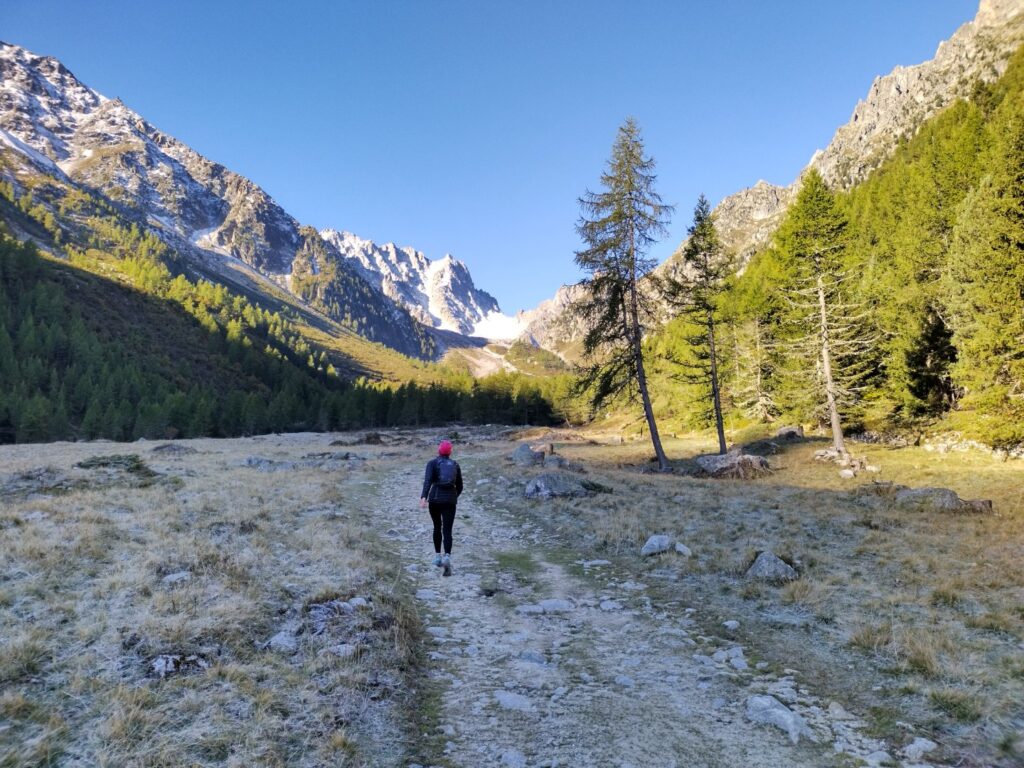
Fastpacking means travelling light and covering the ground more quickly. Advantages are that you need fewer days to cover classic routes, which means the cost of the trip is lower. Challenges are that you need to be fitter, and you need to invest in lightweight kit. We love the feeling of freedom you get from covering over 30 kilometres a day in the mountains, while others might do it for the challenge of going further or faster.
Whatever your motivation, the trekking infrastructure around Mont Blanc makes it the ideal place to plan your first fastpacking adventure. The big advantage here is the amount of accommodation spread around the circuit, so you can choose how far you want to cover each day. Other famous treks in France and the Alps often have accommodation spaced at one-day intervals. Your choice for a faster paced trip is to run two or three full days together, with no intermediate options.
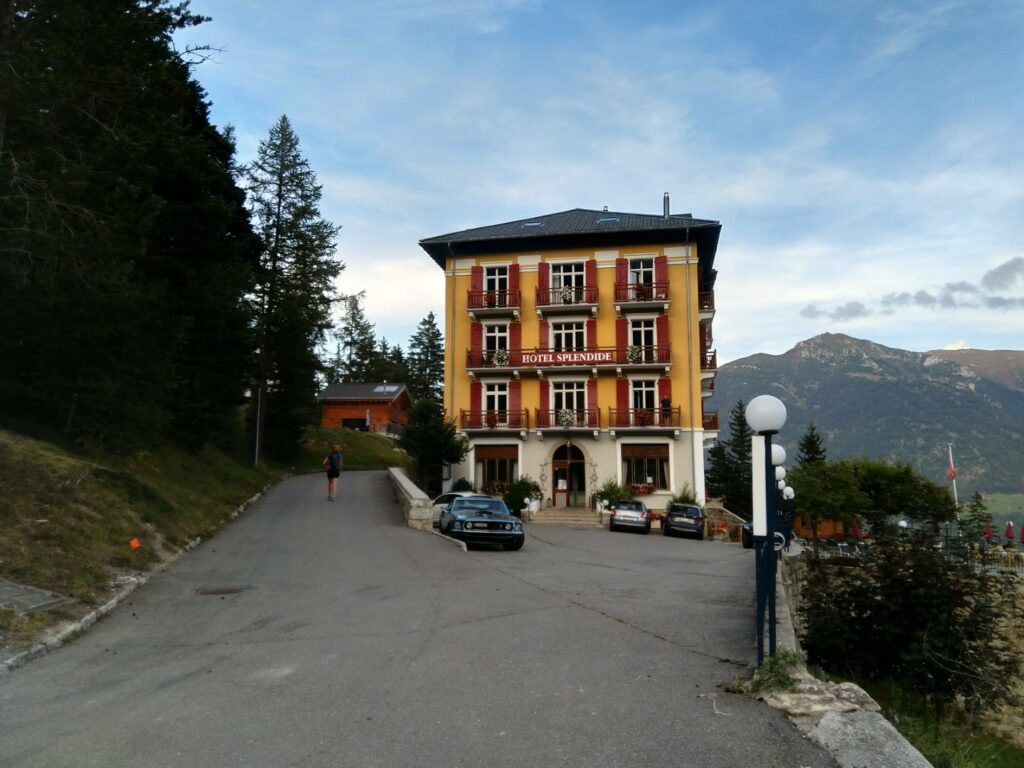
You also have the choice of sleeping in remote mountain refuges or comfortable valley hotels. Regular hikers have no option but to do a bit of both. Personally, I like to take the money saved by spending fewer nights on the trail, and spend some of it on nicer accommodation.
Pacing the Fastpack Tour du Mont Blanc
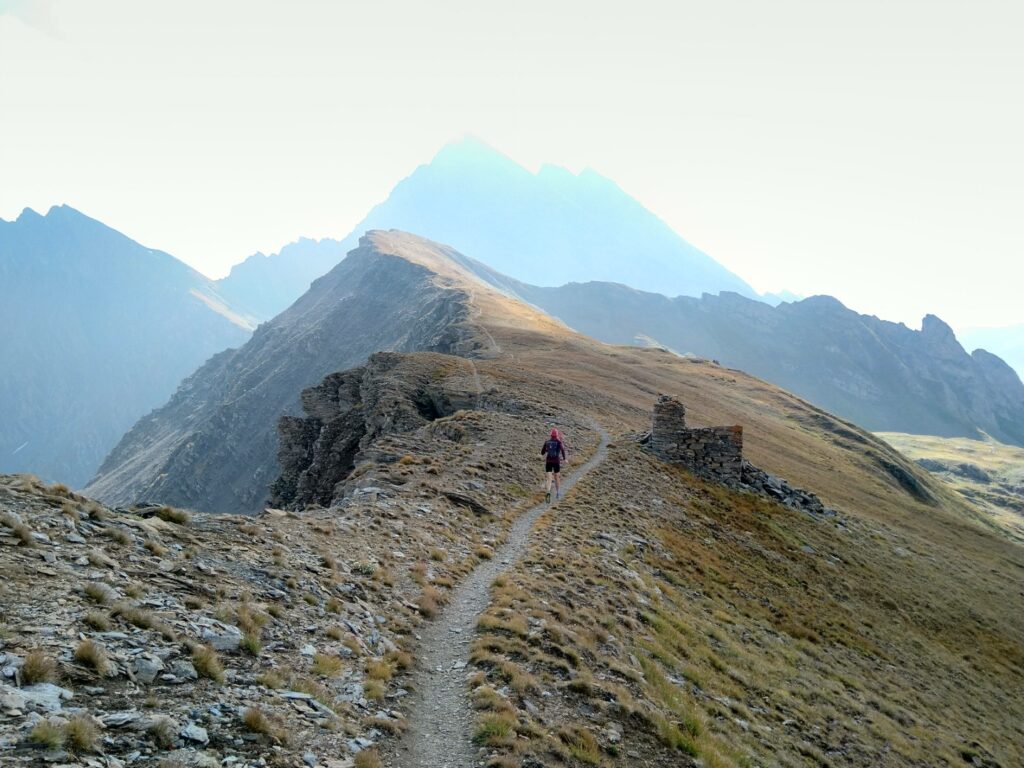
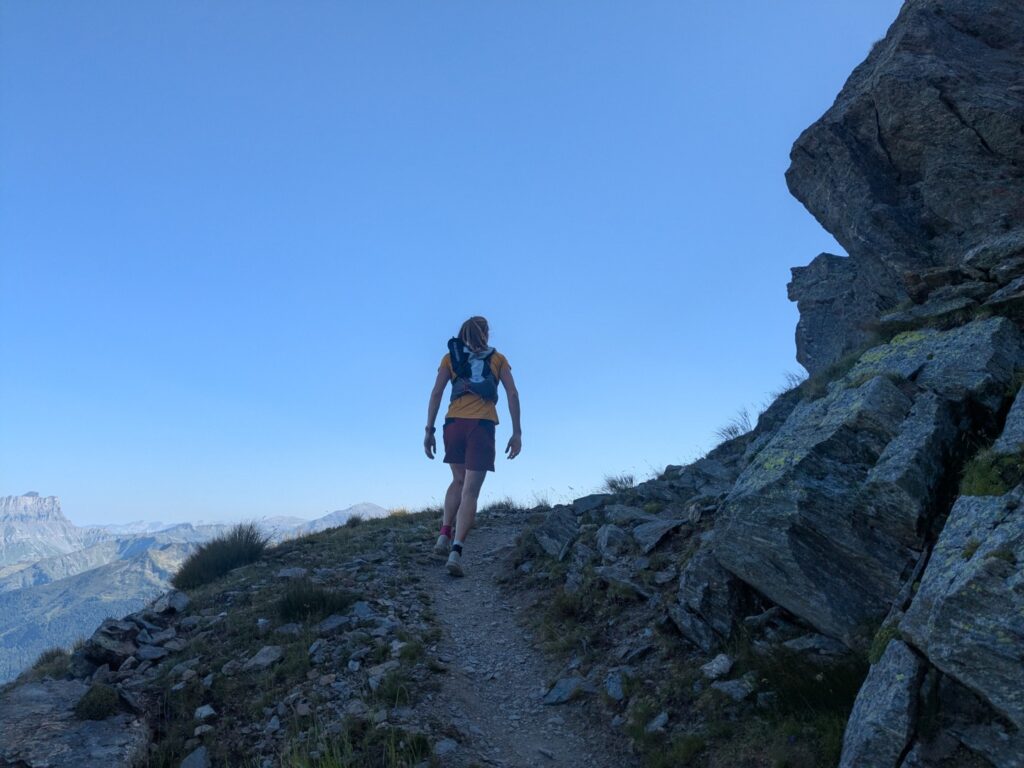
At the slower end, fastpacking blurs the line between hiking and running, while at the faster end you’ll definitely be in trail running mode. There might be a few who cover long distances at a fast walk, wearing hiking boots and carrying more kit . However, the fastpacking category is really about a running approach – lightweight kit, trail running shoes, and at least jogging the downhill sections. We’ll assume you’re taking this style in the sections below.
Walking fast on the uphill sections while jogging the flats and the downs is a typical technique. You’ll need to dress as a runner – trail shoes and running shorts or leggings. You also need to keep going all day, day-after-day. You’ll need to pace yourself and be fit enough to begin with.
The full Tour du Mont Blanc circuit is 160 kilometres with 10 000 metres of elevation gain. For a six-day tour, you’ll need to average 25 kilometres per day with 1600 metres of height gain. This is possible at a good walking pace – it’s 8 hours and 40 minutes of walking with no breaks according to Mr Naismith. In reality, some days will have to be longer and some shorter to fit in with the accommodation you book. A four day circuit means 40 kilometres and 2500 metres of ascent each day. You’re definitely in running territory now.
Managing the Weather and Temperature
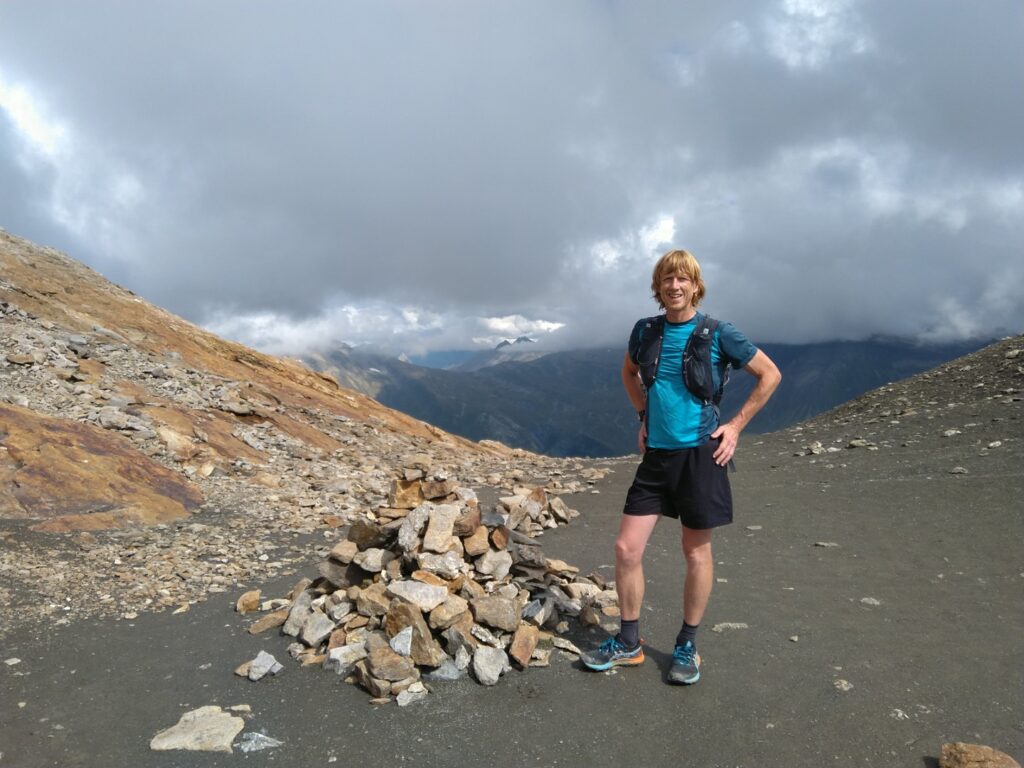
You’ll tend to stay warm while you’re moving and cool down quickly when you stop. Maintaining a good temperature is therefore much more important than when you’re moving at a hiking pace. You might wear less than a typical hiker on a big climb, but need to put the down jacket on quickly when you reach an exposed col.
It’s vital to add or take off layers as needed maintain a good temperature. The last thing you want it to arrive at your accommodation with your clothing dripping with sweat. Try to keep extra layers accessible in your pack so you don’t spend too much time changing.
The other important tip is to study the weather forecasts to understand what’s coming up. Sometimes you can avoid bad weather by adjusting your timings, or by taking shelter in a refuge. Other times you might want to have a contingency plan in mind
Equipment for Fastpacking
The key to making fastpacking possible is to keep your pack light. Staying in refuges or hotels means you don’t need to carry a tent, sleeping bag, sleeping mat, cooking equipment, or more than a day’s worth of food. The exploding popularity of trail running has produced a great range of lightweight kit for both runners and hikers.
You’ll need your running or trekking clothing, plus extras to cope with different weather, minimal changes of clothes, food and water for each day, plus toiletries and navigation and safety equipment.
Typical Kitlist
- Backpack: a large hydration vest of 15-20 litres is ideal if you pack well. It’s lightweight, comfortable, and gives you easy access to food and drink.
- Shoes: trail running shoes are perfect. Prioritise comfort over long distances above absolute light weight here.
- Food and drink: the hydration vest makes it easy to carry a litre of water, and there are places to fill up on the route. If it’s very hot, or you’re doing a route variation with limited water, consider adding a water bladder. For food, you’ll be able to buy lunches overnight at the refuges or in the towns and villages. Take any snacks you know work well for you.
- Clothes: I take leggings and shorts, plus lightweight short and long sleeve tops, socks and underpants.
- Bad weather clothes: a lightweight running waterproof weighs almost nothing, while a light down jacket is the biggest thing I carry but worth it in my view. Don’t forget a hat, gloves, and perhaps a neckwarmer.
- Sunny weather essentials: sunglasses, suncream, and a cap.
- Change of clothing: spare underpants, socks, and T-shirt weigh a few grammes, and I’ll wash them as I go. I might take more if I think it will be difficult to wash things every night.
- Refuge clothes: definitely a luxury. I take a lightweight pair of long trousers and a spare long sleeve top (which I’ll run in the next day).
- Toiletries/refuge extras: if you stay in hotels, all you really need is a toothbrush and toothpaste. If you’re staying in refuges, you’ll need a travel towel, sleeping bag liner, and soap/shampoo. I find a solid shampoo bar is a lightweight and sustainable option.
- Navigation and communication: GPS watches are fantastic, as are smartphone navigation apps. However, make sure you have the ability to keep your devices charged, especially if you rely on your phone for everything. A power bank is a must. Be familiar with your mapping app. Don’t try to navigate in the mountains with Google Maps – use one of the many outdoor navigation apps available. Devices like the Garmin InReach are getting more popular for both navigation and emergency communication.
- Safety gear: first aid supplies, personal medication, and a survival blanket. You’ll need to be able to treat chafing and blisters, as well as minor injuries and sprains. I take Compeed blister plasters and physio tape, as well as plasters, bandages etc. A torch is a good idea, as long days increase the chance of getting caught out after dark. A torch and whistle are both good for attracting attention too.
- Lightweight trekking poles are optional but well worth the extra weight for the energy you’ll save on the ups.
Booking the Fastpack TMB
One problem with the Tour du Mont Blanc is that it’s becoming an incredibly popular route. There may be a lot of accommodation options, but many of those get booked up as soon as they open their bookings. This happens in October for the following summer, so you need to book early to have the best choice of accommodation, especially if you want private rooms.
As a TMB fastpacker, the advantage you have is that you can skip over the more congested areas with a long day. If you are booking late (i.e. after the previous October) you could still put together an itinerary that works. The worst bottlenecks are around Les Chapieux/Les Mottets in France, and Trient in Switzerland. At hiking pace, it is difficult not to stay at one of these. At fastpacking pace, you can easily get from the Bonhomme refuge to Courmayeur in a day without staying in Les Chapieux. Or you could run from one of the upper-Montjoie refuges to a Val Veny refuge. Around Trient, you can run from Champex Lac to Le Tour without a night in Trient. In short, you have a lot more options.
If the organising side of things is a bit daunting, we can plan and book your Fastpack Tour du Mont Blanc as a self-guided trek. Get in touch for details.
However you arrange it, completing the Tour du Mont Blanc in four to six days is both a great achievement and a fantastic experience you’ll remember for a long time.


