How to prepare for multi-day treks
In multi-day trekking, as with most things, good preparation makes the experience smoother and more enjoyable. But if it’s your first multi-day trek, it can be hard to know how to prepare properly. Read on for our rundown of preparation, fitness, equipment and packing for multi-day treks.
Prepare your fitness for multi-day treks
This is perhaps the most obvious part of preparation. You probably know you need to be reasonably fit, but you might not be sure how how fit is fit enough.
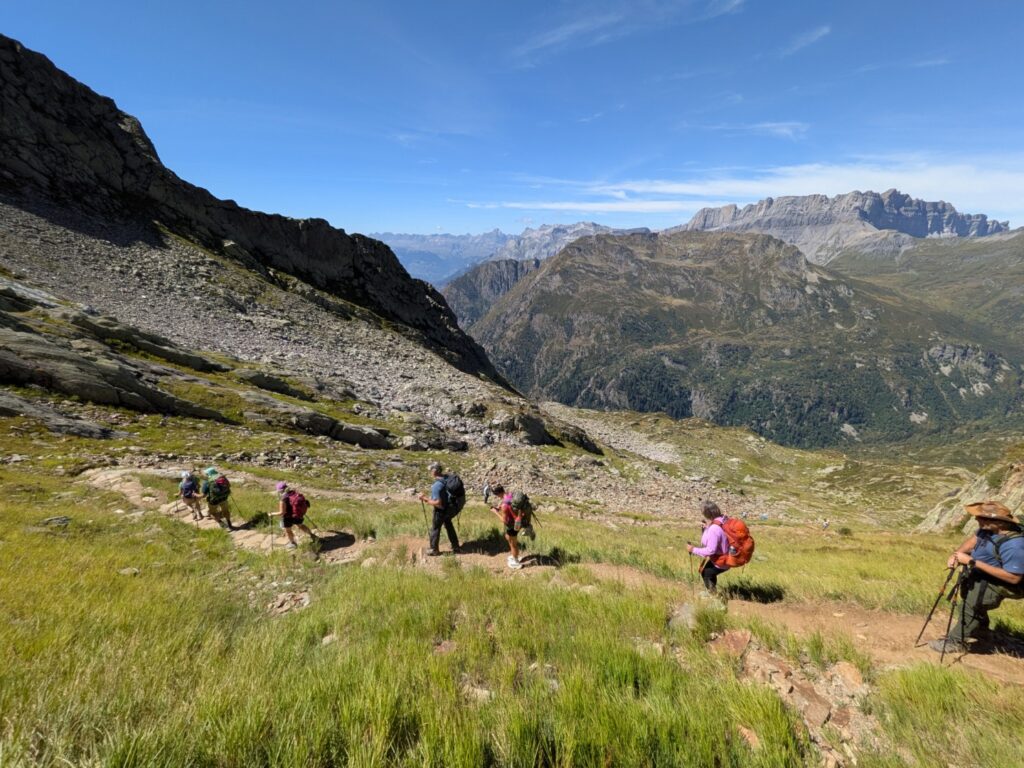
The key is to be hiking fit. Any sort of aerobic training will help you to prepare, but if you never hike up a mountain you’ll suffer when you arrive in the Alps. If you live somewhere hilly, or mountainous, get out for a few practice hikes. If you live somewhere flat, try to find your nearest hill and hike up it – more than once if necessary.
A good gauge of pace is how fast you can go up- and downhill. Try to go uphill at a steady 300 to 400 vertical metres per hour. That’s around 1000 to 1300 feet. When coming down, aim for 400 to 600 metres per hour (1300-2000ft/hr).
Speed on the ground is a harder metric to use. On flat ground, 4 to 5 kilometres per hour (2 ½ – 3 mph) is a good pace. On a hilly trek the same hiker might only cover half that distance.
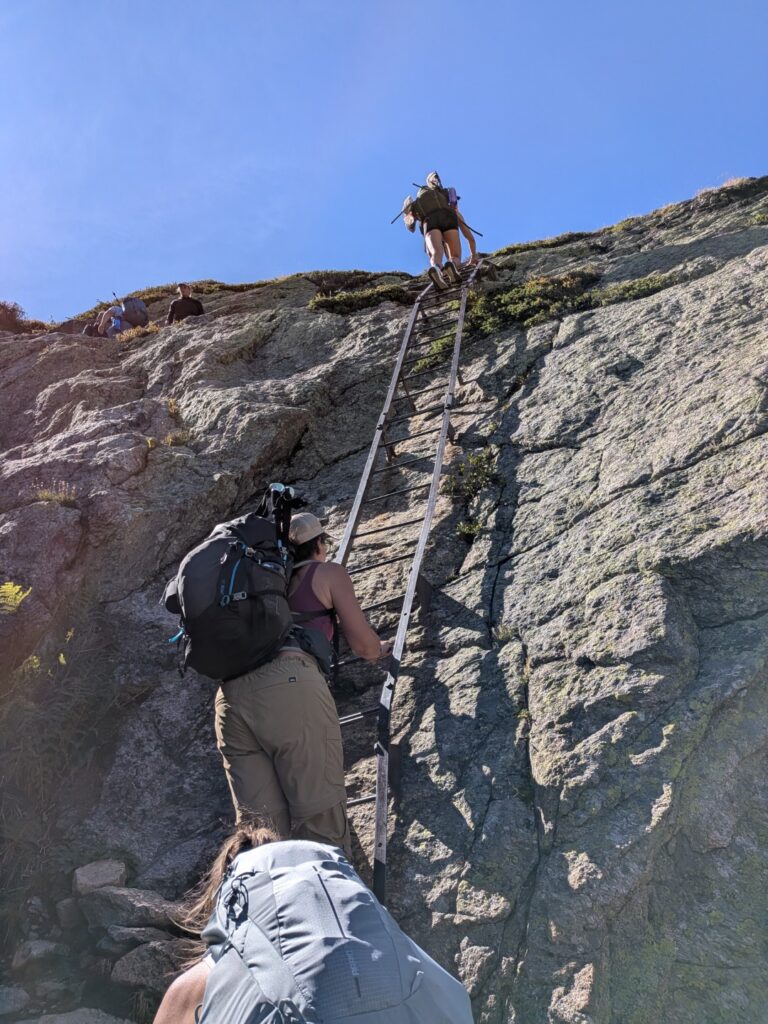
Many hikers slow down a lot (halving their pace again) when the ground gets uneven. We’re talking about rocky trails, narrow exposed sections, steep downhills, or forest trails covered in tree roots. With a little practice on this terrain, you’ll find you can go almost as fast as on a wide, easy trail. It’s worth getting this practice in if you possibly can.
How much to carry on a multi-day trek.
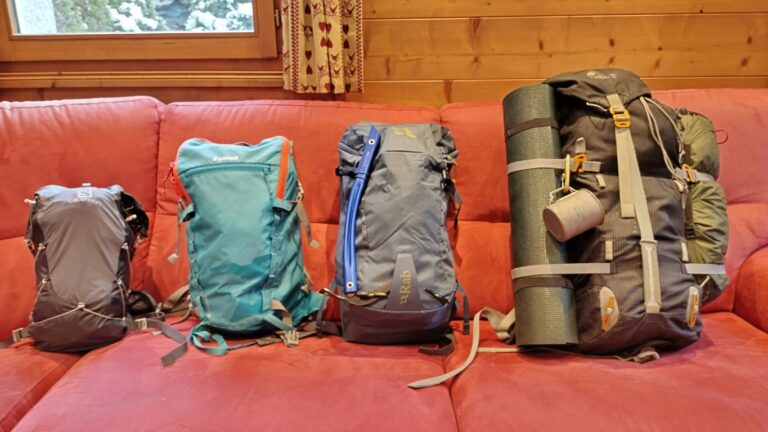
Think hard about what you put in your backpack for a multi-day trek. A big part of the preparation is planning what you can carry. There is a certain amount that you need to carry, but anything unnecessary will only slow you down. Think light all the time. Heavy cotton layers are out, lightweight merino wool and synthetic fabrics are in. Lightweight down jackets are fantastic, and waterproofs are getting lighter all the time.
Do make sure you bring enough for all weathers. You’ll need clothes for hot days, cold days, sunny days, and wet or windy days. Trekking poles are a huge help as well.
Toiletries can be pared to the minimum, although some will have specific items to bring, especially as we get older. Take a solid shampoo bar, and decant liquids into smaller containers or buy them in small quantities.
Take a look at the electronics too. Try to bring one USB charger with a two pin hexagonal European plug, cables for your phone and watch, and perhaps a power bank.
For a more detailed rundown of what to bring, take a look at our post on What to Pack for Multi-day Treks.
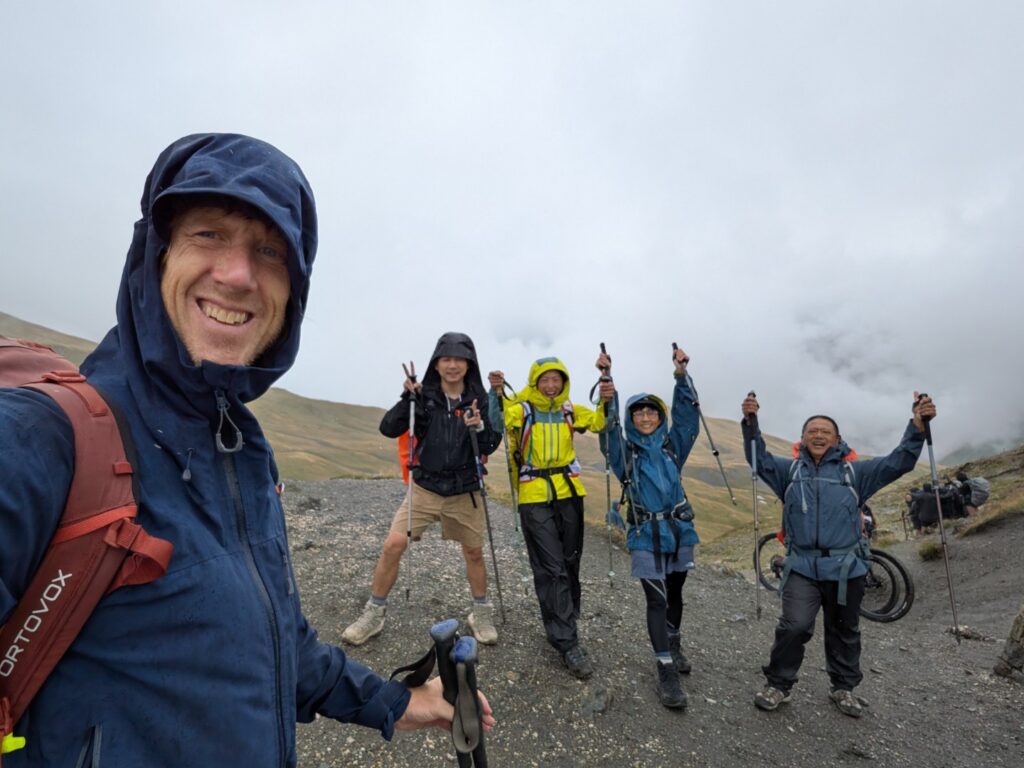
Footwear
On a multi-day-trek, footwear is a very personal choice. You need to have enough grip on uneven ground. If you’re new to hiking, it’s a good idea to have some ankle support and edge grip too. Stiff hiking boots are great, with ankle support, good grip, and the ability to stand on small edges. They do tend to be heavy and can get uncomfortable after a long day. Trail running shoes are light and comfortable, with enough grip, but they are soft and offer no support or edge grip. Approach shoes are a compromise with stiffer soles but not much ankle support.
Whatever type of boot or shoe you go for, make sure they fit well. Shoes that are either too big or too small can be uncomfortable and give you blisters.
It’s your choice what to wear, but you don’t want to try out something new on the big trek. By the time you set off you should be comfortable in the shoes you’re going to wear.
Trying it out
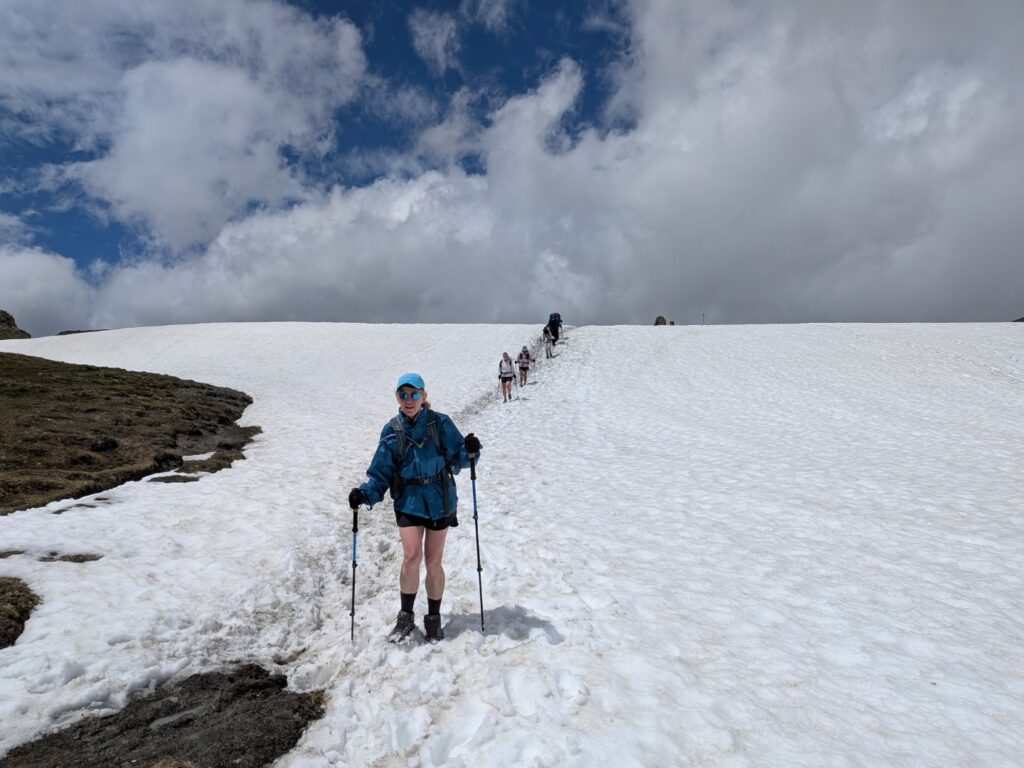
Which brings us onto the next part of the preparation – testing your choices. Go hiking for the day with your full backpack and the footwear you’re planning to wear. Think about whether you’ll be happy to carry this weight for several days. Check whether your clothing and footwear are comfortable enough and functional enough.
If you get the chance to hike in different weather, even better. You’ll be able to test your waterproofs as well as your warm and cold clothing layers. You’ll also see whether your footwear grips on wet terrain and whether your feet stay dry.
On the subject of footwear, now is the time to see whether your hiking boots or shoes will give you blisters. If they don’t, fantastic. If they do, you might just need to do a few more hikes to wear them in. And you can try to manage the blisters by changing your socks, or using moleskin/blister plasters. However, if none of this works and you still get blisters, it could be time to start again and look for different footwear.
Getting to the trek
With everything perfectly planned, you can look forward to your well-prepared multi-day trek. If it’s still some time away (because you’ve planned so well), it’s tempting to leave all the kit in the cupboard until nearer the time. However, it’s important to stay hiking fit ready for that trek. You don’t have to go out every weekend – many of us do have other hobbies and other commitments. However, an occasional day in the mountains, ideally with some elevation gain and a good-sized backpack, will make a difference once you’re on the trek.
Which multi-day trek to do?
And about that trek. If you haven’t decided on one yet, have a look at our group treks in the Alps, trekking holidays in Norway, or our bespoke et self-guided treks.