Beginners’ Guide to Chamonix
For first time skiers and first time winter visitors to Chamonix
Chamonix is not like other ski resorts. It’s historic, full of character and jaw-droppingly spectacular. But there is little ski-in-ski out accommodation and even the blue runs are tough. It’s the cradle of alpinism, birthplace of the Winter Olympics and home to the Alps’ highest peak. But you won’t find hundreds of kilometres of connected pistes. The world’s top extreme skiers and mountaineers are drawn here to test their skills. For beginners and intermediates it can be a tough place to get started. The valley is busy in winter, but even busier in summer when hikers, mountaineers and sightseers come to explore the Mont-Blanc Massif.
Chamonix is a world famous destination for mountain sports, including skiing. It has a beautiful old town centre and has been a tourist hotspot for 250 years. But its age and its history mean that it is not nearly as user-friendly as many more modern resorts. Read our guide to get the best out of this unique mountain valley.
For the best times of year to visit, see Quand visiter Chamonix.
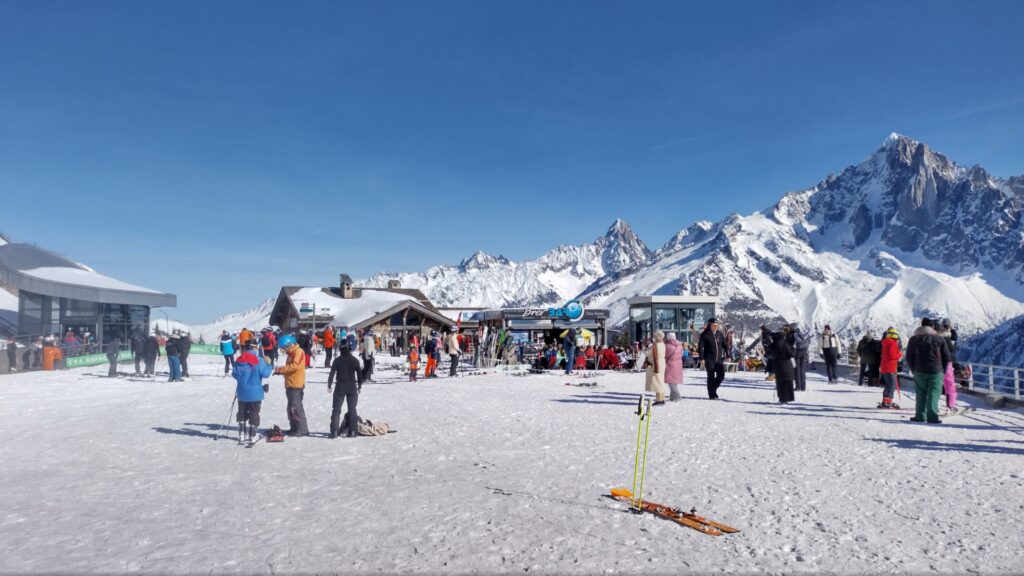
Chamonix pros:
- Some of the best views in the Alps
- A historic town full of mountain charm
- Easy to get to
- Lots of vertical
- More activities for non-skiers than most resorts
Chamonix cons:
- The ski areas are not well connected
- Limited intermediate terrain
- Many runs are challenging for their grade
- Tough for beginners
Getting to Chamonix
Apart from its history, famous name and big mountains, a more prosaic reason for Chamonix’s enduring popularity is its proximity to Geneva airport. Many of France’s other top ski resorts are three hours drive from an airport, and more by bus. But from Geneva you can be in Chamonix in a little over an hour. There are many options for transfers – private taxis, shared door-to-door transfers, or scheduled buses. We work with Mountain Dropoffs, and would highly recommend them. There are plenty of other companies at all price points as well.
Hiring a car can be worthwhile, as it makes it easier to get around when you reach Chamonix. There are two car hire centres in Geneva airport, one in Switzerland and one in France. The French side is usually cheaper, but you’ll have to buy a Vignette for 40 Francs if you use the Swiss motorway. It’s a long way round if you don’t. Make sure you get snow tyres or chains as these are compulsory in winter in the mountainous regions of France.
Chamonix also has a railway station, so getting here by train is possible, especially from elsewhere in France. There is a slow train which connects the town to Le Fayet in France and Martigny in Switzerland. From Le Fayet there are regular fast trains to the rest of France.
The Layout
Chamonix lies at the centre of a long deep valley, with the base at around 1000 metres altitude. Arriving from the rest of France, or from Geneva airport, the dual carriageway climbs steeply through a narrow gorge. Before Chamonix, you pass the smaller ski town of Les Houches before arriving in Chamonix proper. If you keep going, you’ll arrive at Les Praz, then Argentiere, Vallorcine and the Swiss border just beyond. If you turn right just as you reach Chamonix, you can head up to the Mont-Blanc tunnel which takes you into Italy.
Getting about
Because Chamonix skiing (and everything else) is spread along the length of the valley, you’ll need to travel more than in most resorts. Ski-in-ski-out is not really a thing here. Locals complain frequently about the parking and the buses. It’s true that travel gets difficult in the school holidays, but at other times of the year it’s a little easier
There is an extensive bus network and the buses are reasonably frequent. For the most popular destinations, there will be a bus every ten minutes at busier times. The free service runs regularly between Les Houches and Le Tour during the day. Occasional buses go as far as Servoz and Vallorcine. There is also a paid night bus service later on. In the busiest periods, e.g. February school holidays, the buses get very busy and don’t always stop if they are already full.
Do allow plenty of time if you are taking the bus. And double check you are taking the right bus in the right direction. The system can be a bit confusing until you get your bearings. Have a look at the timetables here.
Car parks fill up quickly at most of the ski lifts, so if you are taking the car try to arrive early at your destination, especially in those busy weeks.
There is also a train which runs the length of the valley and stops within walking distance of most ski areas. It is not as frequent as the bus, but is more comfortable and less likely to be full. You can view Chamonix valley transport information here.
However you choose to get around the valley, allow plenty of time – it always takes longer than you expect to get anywhere.
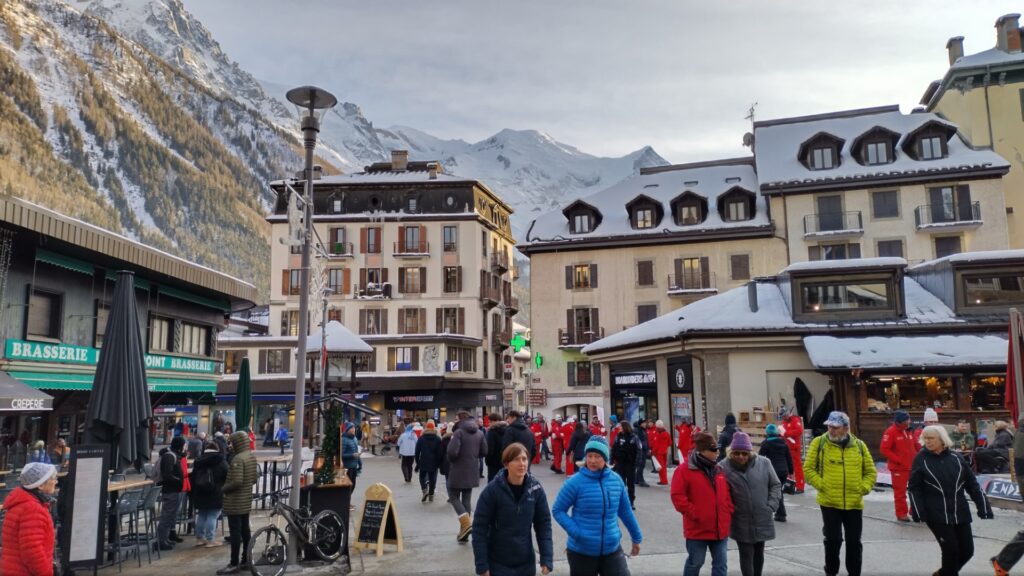
Where to ski in Chamonix
The Chamonix valley has five main ski areas, with two of them linked together and only four of them included in the standard pass. There are also separate beginner areas, three near the bases of the main areas and one separate one.
You have several choices of ski pass too. The biggest and most expensive is the Mont-Blanc Unlimited pass, which covers Chamonix, Les Houches, St. Gervais, Megeve and Courmayeur. It also includes the Aiguille du Midi and Montenvers lifts. The cheaper Chamonix Le Pass covers the four Chamonix areas, but not Les Houches which has its own separate pass. Most areas also offer a cheaper (and poorly advertised) beginner pass if you ask.
For beginners
The town of Chamonix has two low level beginner areas, Savoy on the north side of the valley near Brevent and Planards to the south. Both are reasonable places to learn but suffer from crowds in the busy weeks. There is also a small but steep beginner area at Brevent, reached from Chamonix by a ten-minute gondola ride, but this is challenging for the first day.
Heading up the valley, Argentiere has the Chosalets area for beginners, separate from the main Grands Montets ski area. Chosalets is a little different, with aging lifts and a lost in time atmosphere. There is a great takeaway here as well.
The best area in the valley for beginners is the Vormaine slope at the bottom of Le Tour. This has long, wide, gentle slopes served by a selection of drag lifts. The only downside is that it’s quite a long bus ride from Chamonix.
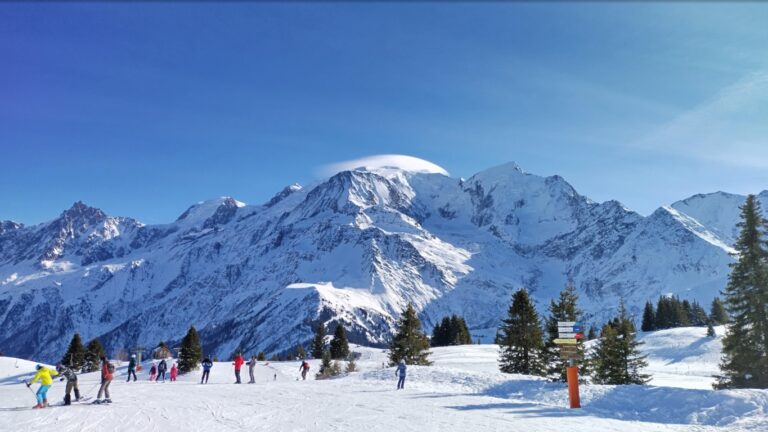
Heading the other way from Chamonix, Les Houches has a reasonable beginner area at the top. Being at the top of the ski area means the snow is reliable. There is a nice magic carpet lift and a beginner chairlift in a pleasant bowl with great views of Mont Blanc. Downsides are that it isn’t included on the standard Chamonix ski pass, and that it takes a while to reach via the Prarion gondola and a short walk. Les Houches has two more beginner areas at the top of the Bellevue lift and down in the village centre.
The main ski areas
Brevent-Flégère
In the town of Chamonix itself, the only ‘regular’ ski area is Brevent, which is linked to Flégère by a liaison cable car. This combined area has a decent selection of reds and blues, with more blues in Brevent and more reds in Flégère. There are also a couple of greens in Flégère and some famous blacks to test advanced skiers. The Brevent access lift – the Planpraz gondola – is reached from Chamonix centre with a ten minute walk up a steep hill. Many people either take the bus or use the lifts in the Savoy beginner area to reach it.
Flégère can be reached directly from the village of Les Praz, a few kilometres up the road from Chamonix. This is a great place to ski, but is not suitable for complete beginners.
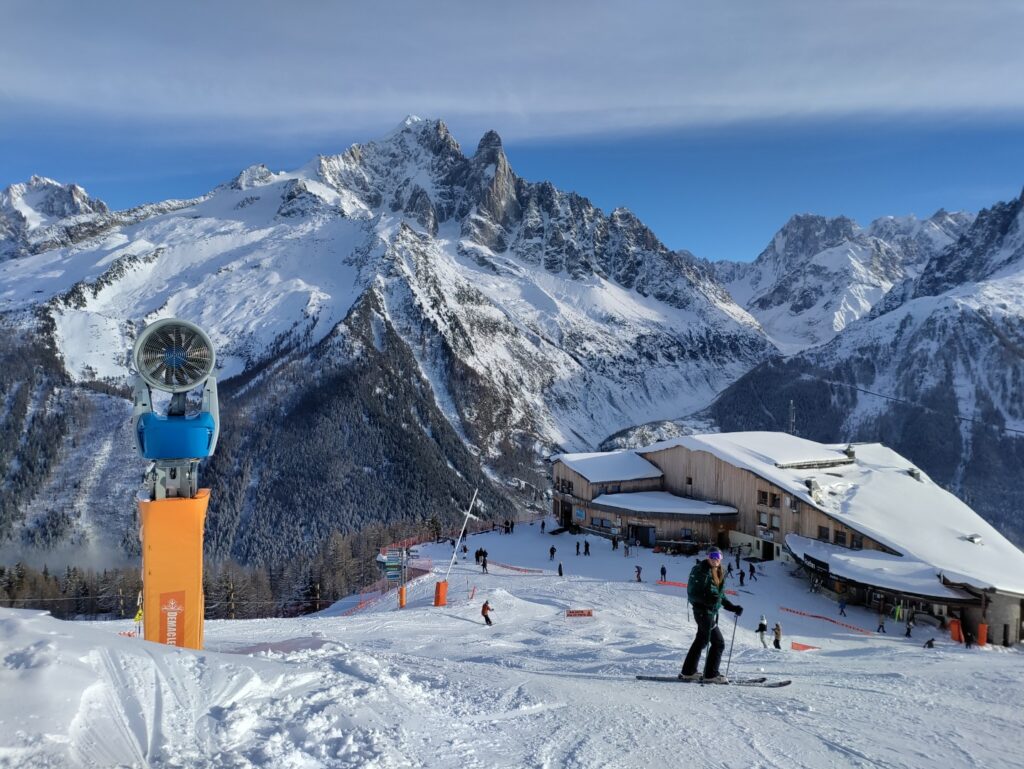
Argentiere and Le Tour
Moving up the valley, Argentiere is home to the Grands Montets ski area. This is perhaps the best known and definitely the most challenging of the Chamonix areas. Most of the runs are red or black, and the extensive off-piste is extremely popular. The scenery here is stunning and it is the starting point for numerous high altitude ski tours including the Haute Route.
At the head of the valley, Le Tour offers mellow cruising on blues and easier reds as well as the aforementioned Vormaine beginner area. It also has some of the best on-piste restaurants in Chamonix. The area is connected to Vallorcine village, which nestles up against the Swiss frontier. Off-piste skiing here can easily take you across the border.
Les Houches
Finally, Les Houches at the bottom of the valley offers pleasant skiing through spruce woodlands with views of Mont Blanc on one side and the Arve valley and Aravis range on the other. There are plenty of blues and reds, plus the long and legendary Kandahar black for advanced skiers. Les Houches is good for piste skiing and families, but has less off-piste potential. It’s also the best option in bad weather as it’s lower and more sheltered.
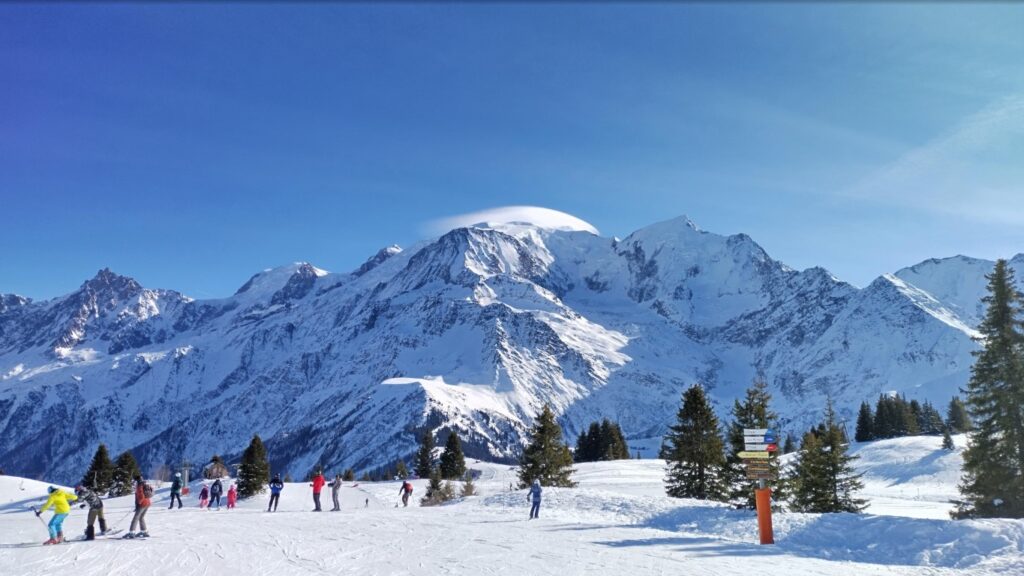
Sightseeing and other activities
Without skis, you can access many of the biggest ski lifts to take in the views or visit the high altitude restaurants. The lifts open to pedestrians include the Aiguille du Midi, Bellevue and Brevent cable cars, the Montenvers and Tramway du Mont Blanc railways, and the Prarion, Planpraz, Flégère, Charamillon and Vallorcine gondolas.
Aside from the ski lifts, there is a mountain coaster and other rides at Planards. The town has a good sports centre and ice rink and as well as several indoor climbing walls, and cross-country skiing and snowshoeing tracks. There are museums dedicated to mountaineering, crystals, and local life as well as several small art galleries on the high street.
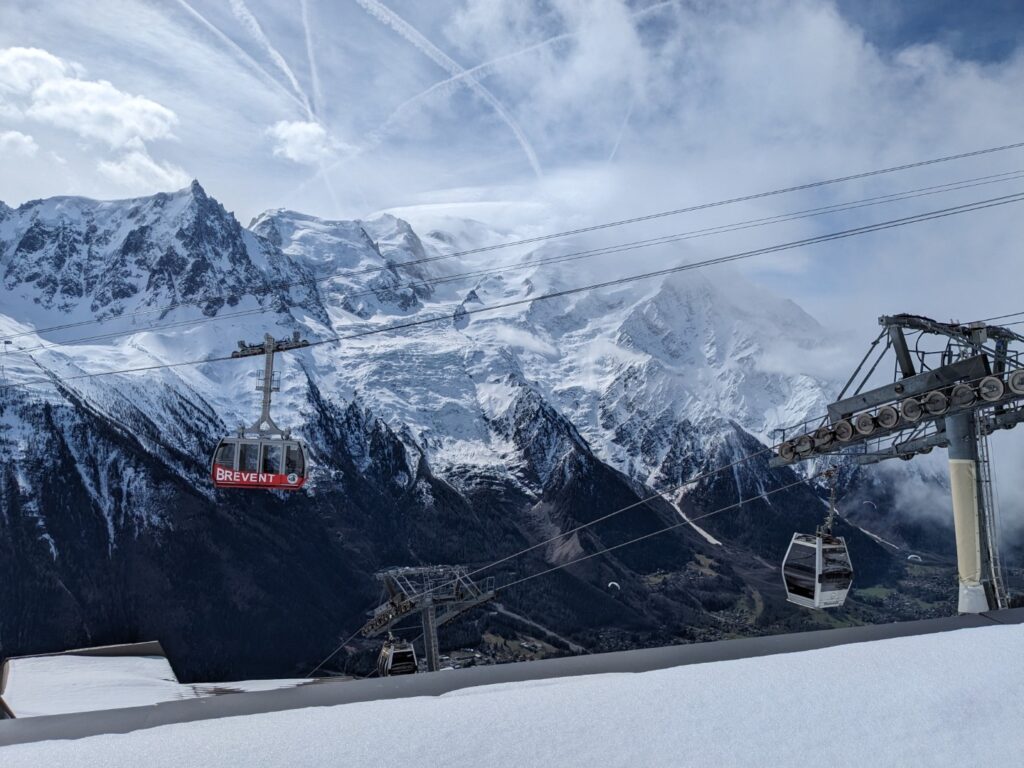
The Aiguille du Midi
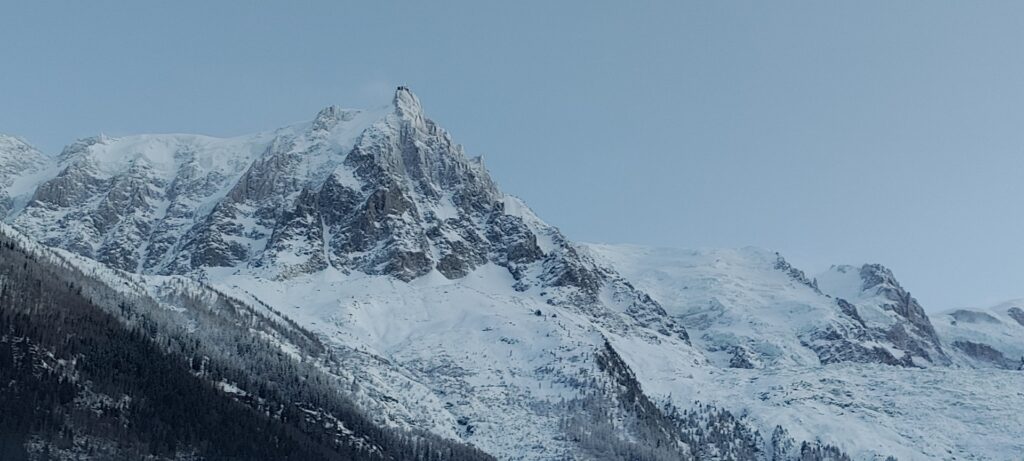
The biggest lift in Chamonix, and the highest in France, takes you from the town centre to the summit of the Aiguille du Midi at 3800m in two stages. Up here there are no pistes, but the views are jaw dropping. Expert skiers can embark on the famous Valley Blanche run which follows the glaciers down to the Montenvers railway station and, with sufficient snow, all the way to Chamonix. Hiring a mountain guide is strongly recommended for this. For alpinists and experienced ski mountaineers, the lift gives easy access to a serious high-altitude playground. For everyone else, there are viewing platforms on all sides where you can gaze endlessly at the ever-changing landscape. There are exhibits on the building of the cable car and mountaineering subjects.
Montenvers
At over a century old, the cog railway takes you from Chamonix town to Montenvers overlooking the Mer de Glace glacier in around 30 minutes. The site includes a historic hotel, restaurant, glacier museum and a trip down a gondola to walk inside the ice caves dug into the glacier. You can easily spend half-a-day or more on the return train ride and seeing the different attractions.
Eating and drinking in Chamonix
Unlike some neighbouring ski areas, Chamonix is not known for dining on the slopes. Most restaurants are owned by the ski lift company and offer very similar menus. Les Houches has the biggest selection of independent restaurants on the slopes. Grands Montets also has a few good independent places (including the hard-to-find and must-book Cremerie et Lognan Refuge), plus the Comptoir a Raclette which is great for a piste-side snack. Le Tour has the Alpages de Balme and the Ecuries de Charamillon, as well as a couple of restaurants at the bottom.
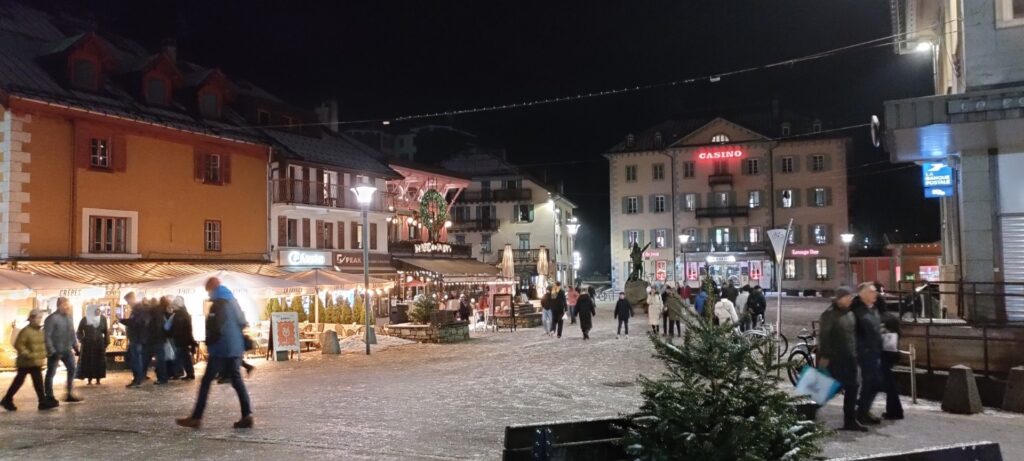
In town, you’re spoilt for choice if you’re looking for typical French Alpine food – fondue, raclette, tartiflette etc. There are also some good Italian restaurants. There are too many good places to name here, and few bad ones, so take a walk around the centre and find something that takes your fancy.
For apres-ski, there are three micro-brewerys in the valley – Big Mountain, MBC et Le Solerey. Apres-ski parties happen at the Folie Douce, and there is a good concentration of bars around Rue du Moulin and Cham Sud. You’ll find places to have a good time but Chamonix isn’t really famous for being a winter party town.
If you’re self-catering and need supplies, Super U and Carrefour are the biggest and cheapest supermarkets.
Top Tips
- Allow plenty of time to get to the slopes – organising ski hire takes time, walking in ski boots is slow, the buses can be slow. In short, getting to where you need to be takes longer than you expect.
- If you’re a beginner, take lessons. Skiing and snowboarding are difficult sports to pick up yourself or learn from your friends.
- If you’re a beginner, don’t start at Grands Montets or Flégère.
- Vormaine is the best beginner slope in the Chamonix Valley
- And for cruising blues or reds, Le Tour is worth the trip
- Avoid the February school holidays if you have the choice
Whether you’re a first-time skier, or first time visitor, this unique mountain town has lots to offer. Getting about can be overwhelming, so take your time and plan ahead. Above all, relax and enjoy some quality time in the mountains.